
Where Time Is Actually Lost in Daily Truck Operations (And Why It Adds Up)
Most operators don’t lose time in one big moment.
Most operators don’t lose time in one big moment. It’s rarely a breakdown or a missed delivery—it’s everything in between that slows the day down.
Across the industry, inefficiency doesn’t usually show up as a single failure. It shows up as friction built into the way work gets done¹. Because that friction is spread across the day, it is easy to overlook—especially when the job still gets done. Across the industry, these types of inefficiencies are one of the most common drivers of operational cost and lost time¹.
The Job Isn’t Slowing Down—The Process Is
For most owner-operators and small fleets, the day is built around momentum—getting from one job to the next without unnecessary delays.
Beneath that, the process is not always as efficient as it appears. Some parts of the job take longer than they should—not because they are complex, but because they rely on the same manual steps every time. A few extra minutes here, a bit more effort there. It does not feel significant in the moment, yet it begins to shape the entire day.
Where It Shows Up First
This does not usually appear in reports—it shows up in the work itself, in the extra minutes it takes to complete routine tasks.
It becomes visible when:
- a task takes longer than expected
- an adjustment needs to be repeated
- a process depends on how it is done rather than simply what is done
Manual handling is one of the most common examples, not because it is unusual, but because it is constant².
These moments are small, yet they are consistent. That consistency is what makes them matter.
What It Actually Costs
The impact is not just time—it is what that time affects.
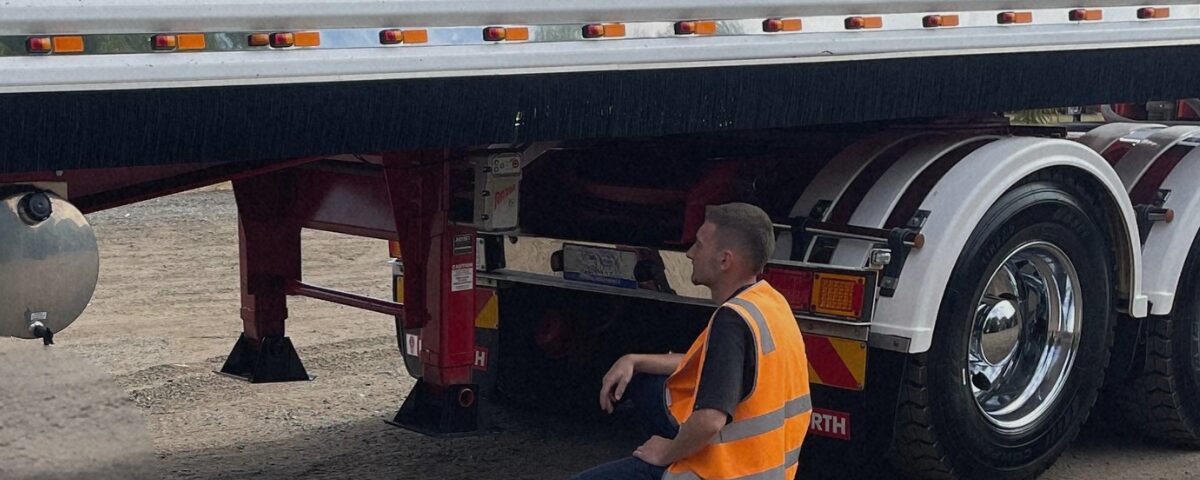
For example, something as routine as setting up or adjusting a trailer can take a few extra minutes each time. On its own, that delay is easy to ignore. Across multiple stops, it becomes part of the day’s total time.
Across the day, small inefficiencies begin to influence:
- fuel usage through idling and stop-start movement
- driver hours and fatigue
- the consistency of each job
- overall profitability per run¹
What initially appears to be a minor delay becomes something that shapes how the entire operation performs.
To put that into context:
- Losing 5–10 minutes per stop across 6–8 stops in a day can add up to 30–60 minutes lost daily
- Over a week, that becomes 2.5 to 5 hours of additional time
- Across a year, that can mean over 100–250 hours of lost productivity
Even small increases in idling or inefficient movement can raise fuel use by around 5–10% over time, particularly in multi-stop operations¹.
For an owner-operator, that does not just affect time—it affects how long the day runs, how much fuel is used, and how many jobs can realistically be completed.
What starts as a few extra minutes becomes a measurable cost.
Why It Stays Hidden
Despite the impact, most of this inefficiency goes unnoticed.
If something breaks, it gets fixed. If something works—even if it is inefficient—it remains.
That is why these issues persist. The job still gets done, so the process is rarely questioned. Over time, inefficiency becomes part of the routine, and what could be improved becomes accepted as normal.
What Changes When You Look At It Differently
The biggest improvements do not come from working harder—they come from changing the process.
When a process is simplified, variation is reduced. Effort becomes more consistent, and outcomes become more predictable.
- fewer steps
- less effort
- more control
- more predictable results
The difference is not just in time saved—it is in how the job feels across the entire day. Fewer interruptions, fewer repeated adjustments, and less reliance on manual effort all contribute to a smoother operation.
Where the Shift Starts
For most operators, the turning point is not driven by new technology. It begins with a simple question:
👉 Does this part of the job need to be done this way?
Once that question is asked, the focus shifts from accepting the process to rethinking it. This is where meaningful change begins.
Start With the Process
If certain parts of the job feel like they take longer than they should—or require more effort than expected—it is worth taking a closer look. The focus should not only be on the outcome, but on the process behind it.
Small changes, applied consistently, can make a bigger difference than most expect.
👉 To see how other operators are improving this part of the job, connect with your local Razor dealer and start the conversation.
References
1. Tow4Tech. The High Cost of Downtime and Missed Delivery Windows in Trucking.
2. Truckpedia. Why Most Trucking Companies Fail and How to Avoid It.